Why we light every facade at 2700 K
Warm white, dimmed after sunset, aimed at the building and not the sky. The lighting rules behind Eco Atlantic’s LED frame — and why we test them on site, not on a render.
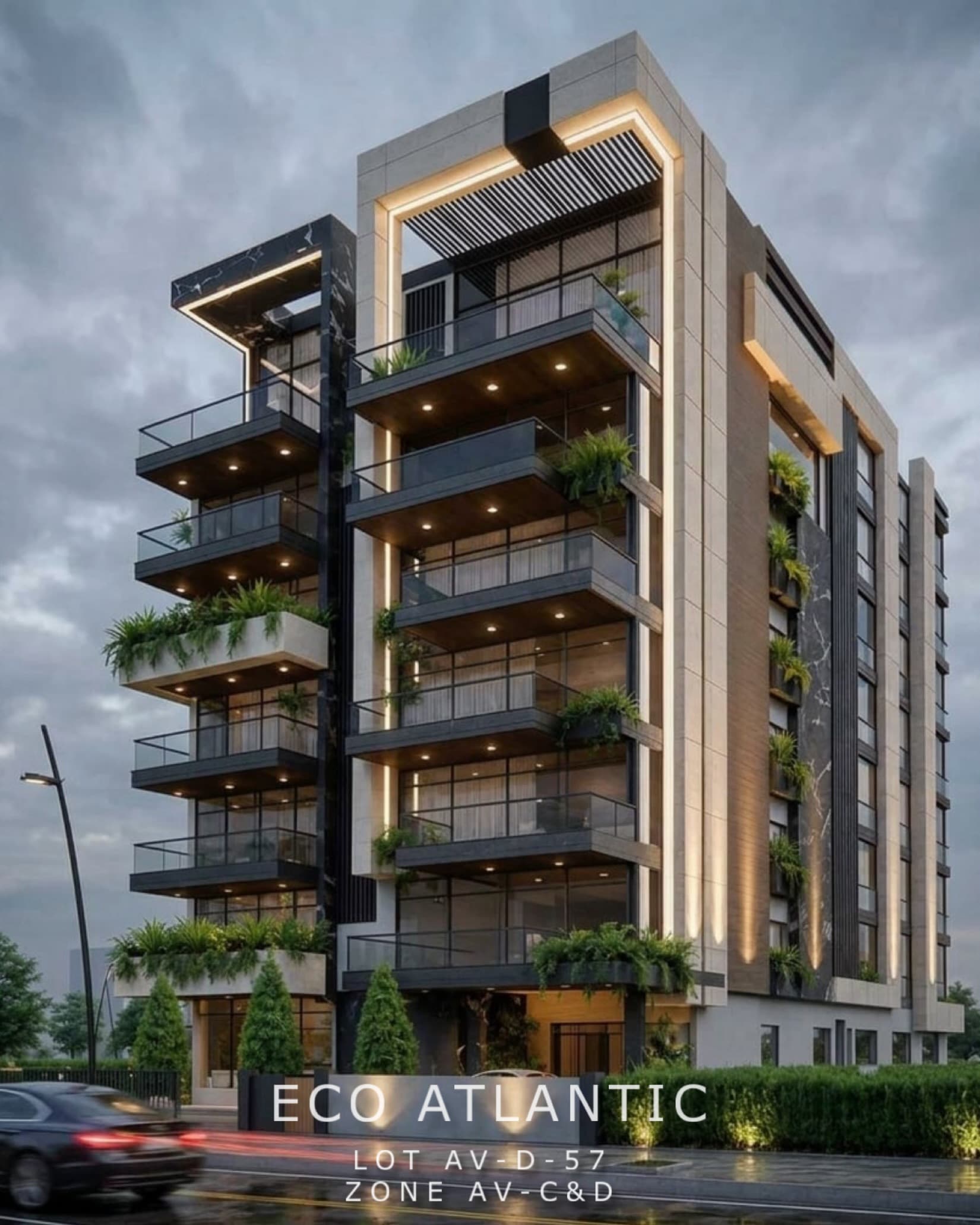
On the evening of 14 October we switched on the first full-height run of the LED frame on the north elevation of Eco Atlantic Residences. It was the fourth lighting test on that building, and the first one the client saw in person. It is also the reason this post exists: almost everyone who sees the building lit asks why the light looks so calm.
The short answer is colour temperature. Every facade we light is specified at 2700 K — a warm white, close to the glow of an incandescent bulb — and dimmed to 40% after the first hours of darkness.
Why warm, and not daylight white
Cool white light (4000 K and above) is cheap and bright, and it is everywhere on Lagos facades. On a building it does two things we don’t want. It flattens materials, so limestone reads as grey render and timber as plastic. And it makes a home look like an office block or a filling station after dark.
Warm light does the opposite. The Ivory limestone on Eco Atlantic picks up its own colour at night, the timber soffits under the balconies read as timber, and the frame becomes a line drawn around the building rather than a billboard.
The rules we design to
- 2700 K warm white on every residential facade, with a colour rendering index of 90 or above.
- Light the building, not the sky: every fitting is aimed and shielded so you see the glow, not the source.
- A dimming schedule from day one — full output at dusk, 40% from 11 pm, so neighbours and residents can sleep.
- Drivers and fittings that can be reached for maintenance from the balconies, not from a crane.
- One continuous line where possible. Gaps and dots read as faults from the street.
Why we test on site
A render can make any lighting scheme look good. Salt air, dust, the real reflectance of the stone and the view from the Eko Atlantic boulevard cannot be rendered. So before the facade contractor orders a single metre of LED, we mock up one bay on the building itself and look at it from the street, from the neighbouring plots and from inside a finished apartment.
On Eco Atlantic that process changed the design twice. The first test was too bright at the crown, and the second showed a visible join every 2.4 metres where the profiles met. The version you can see now uses longer runs and a diffuser one step deeper.
What it costs
Warm, high-CRI LED costs a little more than standard strip — on Eco Atlantic, under 1% of the facade package. The dimming schedule pays part of that back in electricity, and the shielding means fewer complaints and fewer fittings replaced early.
The frame will be fully commissioned when the facade completes next year. Until then, if you drive past after dark, look up at the north side. That is the test we signed off.
Questions about building in Lagos or Abuja? Write to the studio.
Email the studioMore from the journal
- Guides
2 min read
Building in Lagos from abroad: how our weekly site reports work
About a third of our clients live outside Nigeria. Here is exactly what lands in their inbox every Friday — and how we make sure the photos tell the truth.
- Site diary
1 min read
Limestone reaches Level 07 at Eco Atlantic
The cladding crews are now two floors ahead of programme on the east face. A short note from site on how the limestone goes up — and what comes next.